

How does personalization work?
Information collected about an individual is stored in fields on their contact profile (e.g., First Name). This information then becomes available for exhibition in your emails via Merge Tags. When viewed by a contact in an email, these tags automatically reference and show the information associated with the recipients’ contact profile.Personalizing Emails
Supported Merge Tags
Include both
{{ business.address }} and {{ business.unsubscribe_link }} in the email body to hide Privy’s appended footer. See How to style an unsubscribe link.
Using Merge Tags
How to personalize your Subject Lines: A merge tag must be manually typed into a Subject Line. The easiest way to accomplish this is by copying one of the merge tags from this page and then pasting them into your subject line, as shown below.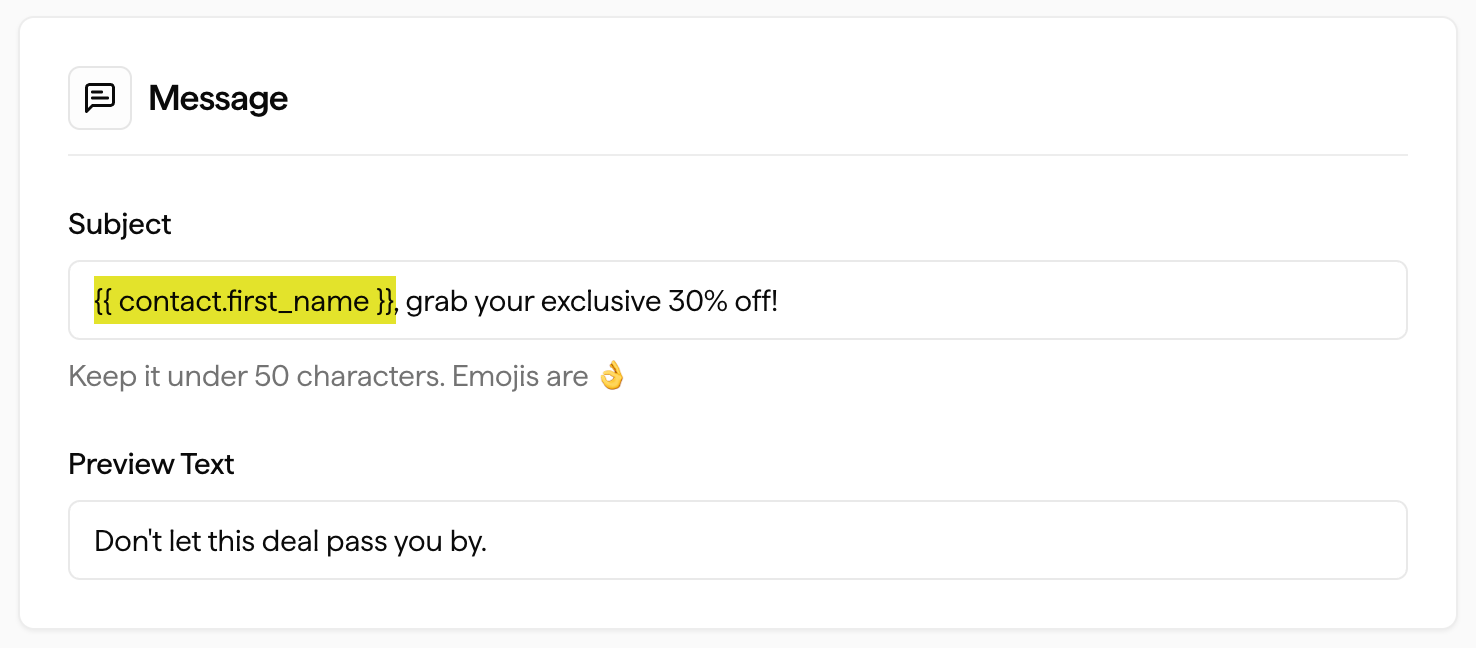
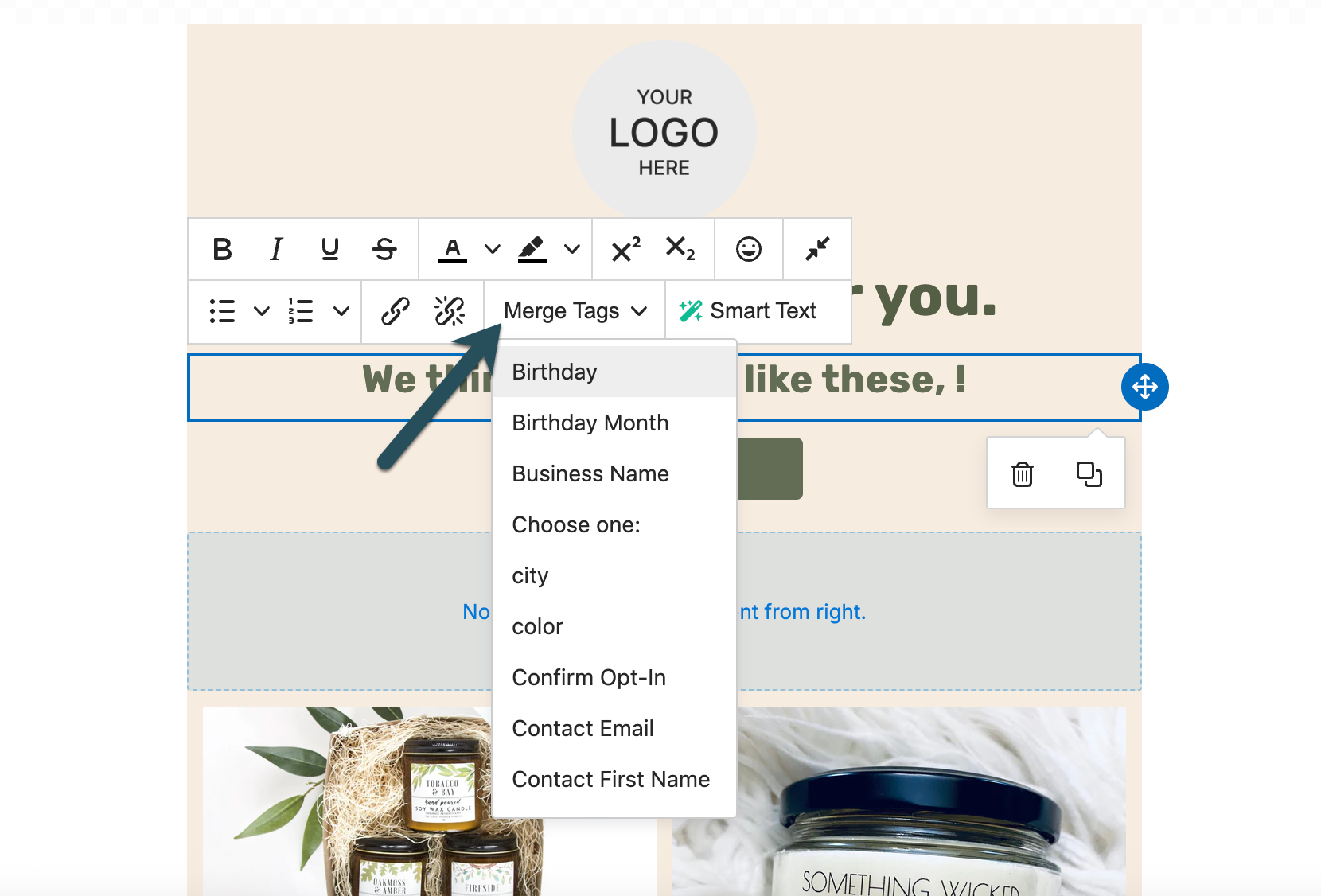
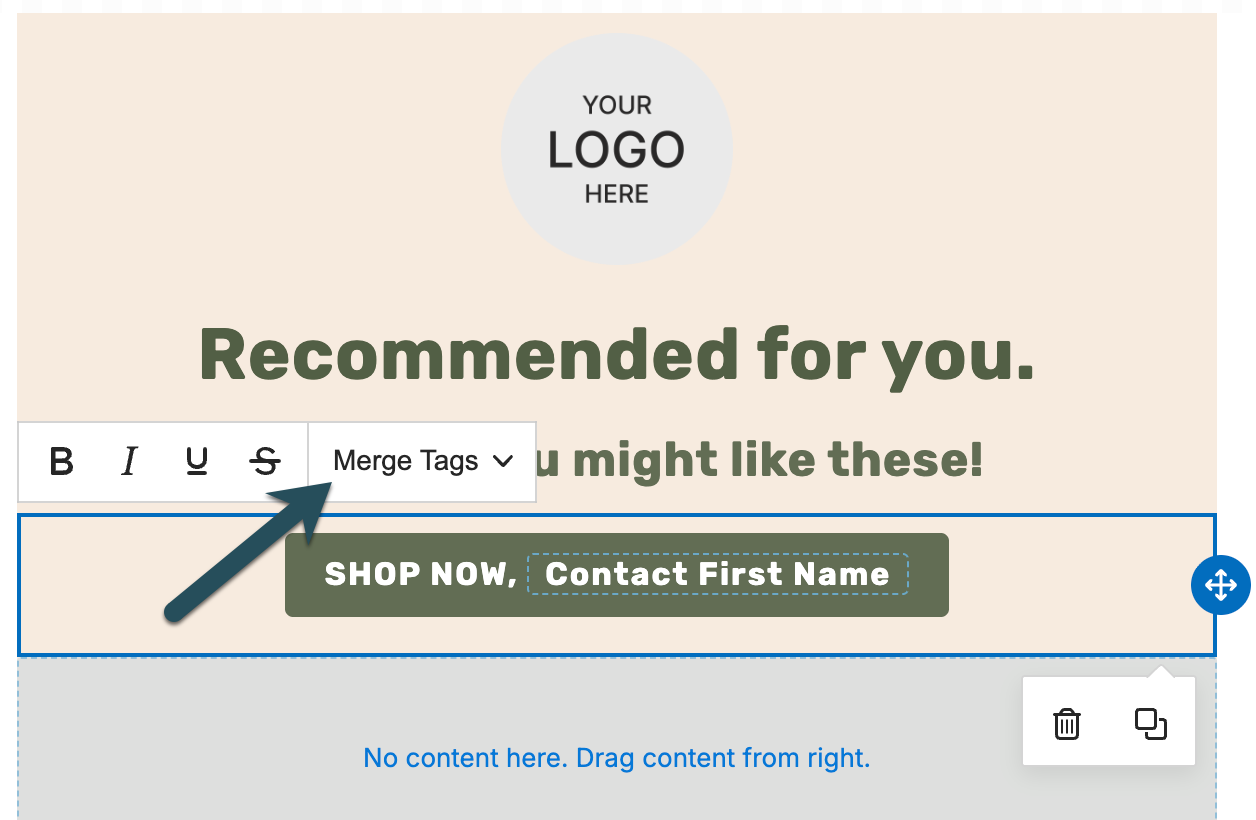
Default or Fallback Values
For any merge tag, you can add a default value to provide a placeholder if there is no information available to pull in from the recipient’s contact profile. If a default value isn’t provided and there’s no value on the contact profile, a blank space will appear instead. To include a default, manually type your merge tag into your content and use this format:{{ contact.first_name|default:'there' }}
Cart Merge Tags in Flows
In Abandoned Cart Flow emails, you can send contacts back to the items they left behind.Order Merge Tags in Flows
These tags pull in order details relevant to the Flow’s trigger.If your store is on BigCommerce, Order in the Merge Tags dropdown shows the tags that apply to your orders. Confirmation Number, Order Status Link, Discount Code, and Shipping Method are Shopify-only.
Order Cancellation
For Order Cancelled Flows, cancellation details are available under Order Cancellation.Refund
For Refund Created Flows, refund details are available under Refund, in both the email Merge Tags dropdown and SMS Personalization. Amounts show in the order’s currency.Refund Created emails can also include a Refund Items block that lists the refunded products, including partial refunds. Add it from the email editor Content panel.
In order-related Flow emails, you can add an Order Total block from the email editor Content panel to show a totals summary. On Shopify, you can also add an Order Products block (line items from the order, with product images and details).
Product Merge Tags in Flows
When building Flow emails and SMS messages, you can personalize content with product-specific merge tags. These tags pull in product details relevant to the Flow’s trigger.Back in Stock
Browse Abandonment
Special Occasion
For Special Occasion and other date-triggered Flows, occasion data is available under the Liquid keydate, using the date field you chose on the Flow trigger (for example Birthday or Wedding Anniversary) and the contact’s value for that field.
There is no single merge tag for one fully formatted date—combine
month, day, and year in your copy if you need a full date line.
Flow email editor: Depending on template and editor version, the Merge Tags menu may not list every Flow-only tag in a submenu. You can still paste or type Liquid from this page into subject lines, text blocks, and buttons.
Shipment
For Order Shipped and Order Out For Delivery Flow emails, shipment data is available under the Shipment group in the Merge Tags dropdown. These tags pull tracking details from the shipment that started the Flow.On Shopify, these emails can also include a Shipment Items block (line items and quantities from the shipment) and a Shipment Details block (tracking and delivery summary). Add either from the email editor Content panel.
Custom Event Merge Tags in Flows
Flows triggered by a custom event received on the Events API can reference values from that event’s payload in email and SMS content. Values come from the specific event that started the contact’s journey through the Flow.
Event tags support the same default / fallback syntax as other merge tags — for example,
{{ event.score|default:'0' }}.
Custom event
event.* tags are only available in Flows triggered by an API event. One-time campaigns aren’t tied to a triggering event and can’t reference event.*.Personalizing SMS
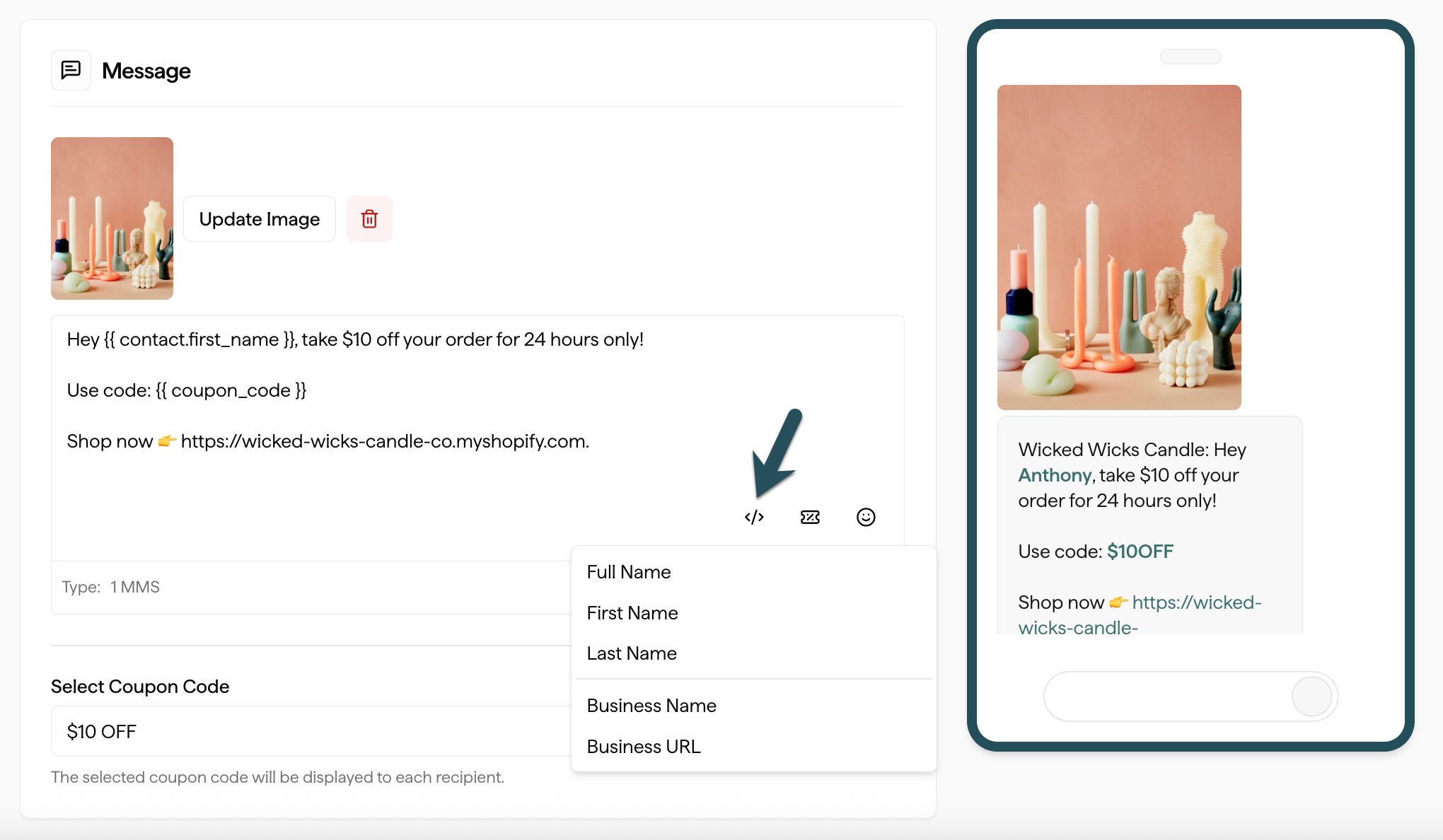
To add a personalization tag to a text message, click on the Personalization dropdown menu and select which tag you want to insert into your content. URL tokens such as{{ cart.url }} and {{ business.url }} can also carry click tags.
FAQs
What happens if there is no value associated with the personalization merge tag you chose? If a contact is missing the value that you chose for your personalization tag, a blank space will appear instead. For example, if you writeHi {{ contact.first_name }} in your Subject Line and the email is sent to a contact without a first name, the Subject Line will read Hi .